Sound, Memory, and Motion: Inside SMK’s Against All Odds
At the National Gallery of Denmark, historical works by overlooked Nordic women artists were reinterpreted through generative visuals, movement, and sound.
Against All Odds – Historical Women and New Algorithms recently concluded at the National Gallery of Denmark, SMK, in Copenhagen. The exhibition brought together archival material, real-time visuals, and sound to revisit the work of 24 Nordic women artists active between 1870 and 1910.
Many of these artists found recognition in their own time, often travelling beyond their home countries to study and work in places such as Germany, Italy, France, and Greece. Later, their contributions were pushed to the margins as cultural and political attitudes shifted. Curated by Emilie Boe Bierlich with digital curator Majken Overgaard, Against All Odds invited visitors to encounter these artists again through a contemporary, interactive lens.
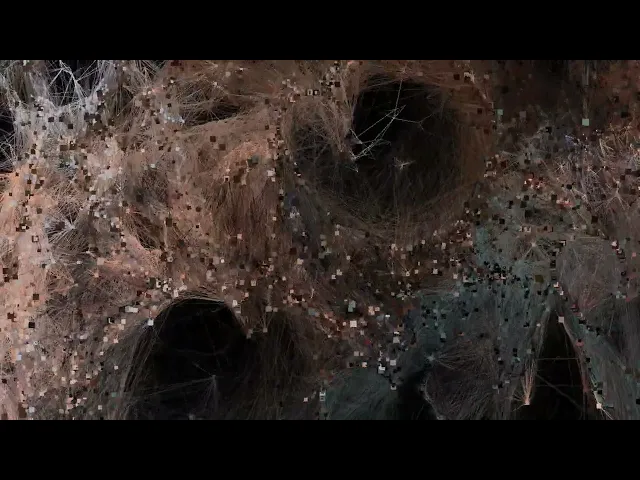
One of the exhibition’s central works was Interlink, created by artist Itzel Yard, also known as Ix Shells, in collaboration with co-programmer and generative artist Rosendo Merel. The piece translated archival material, including colour studies, letters, and travel routes, into a responsive visual environment using TouchDesigner, Notch, and LiDAR sensors.
As visitors moved through the gallery, their presence shaped the work in real time. Patterns unfolded across walls and floors, creating a space where historical material could be explored through motion, image, and sound.
For Merel, sound was essential to the experience. It needed to move with the installation, support the visual language, and give visitors a reason to stay with the work. While travelling between Panama, Miami, Spain, and Denmark, he came across torso electronics in Copenhagen and began working with the S4 sculpting sampler.
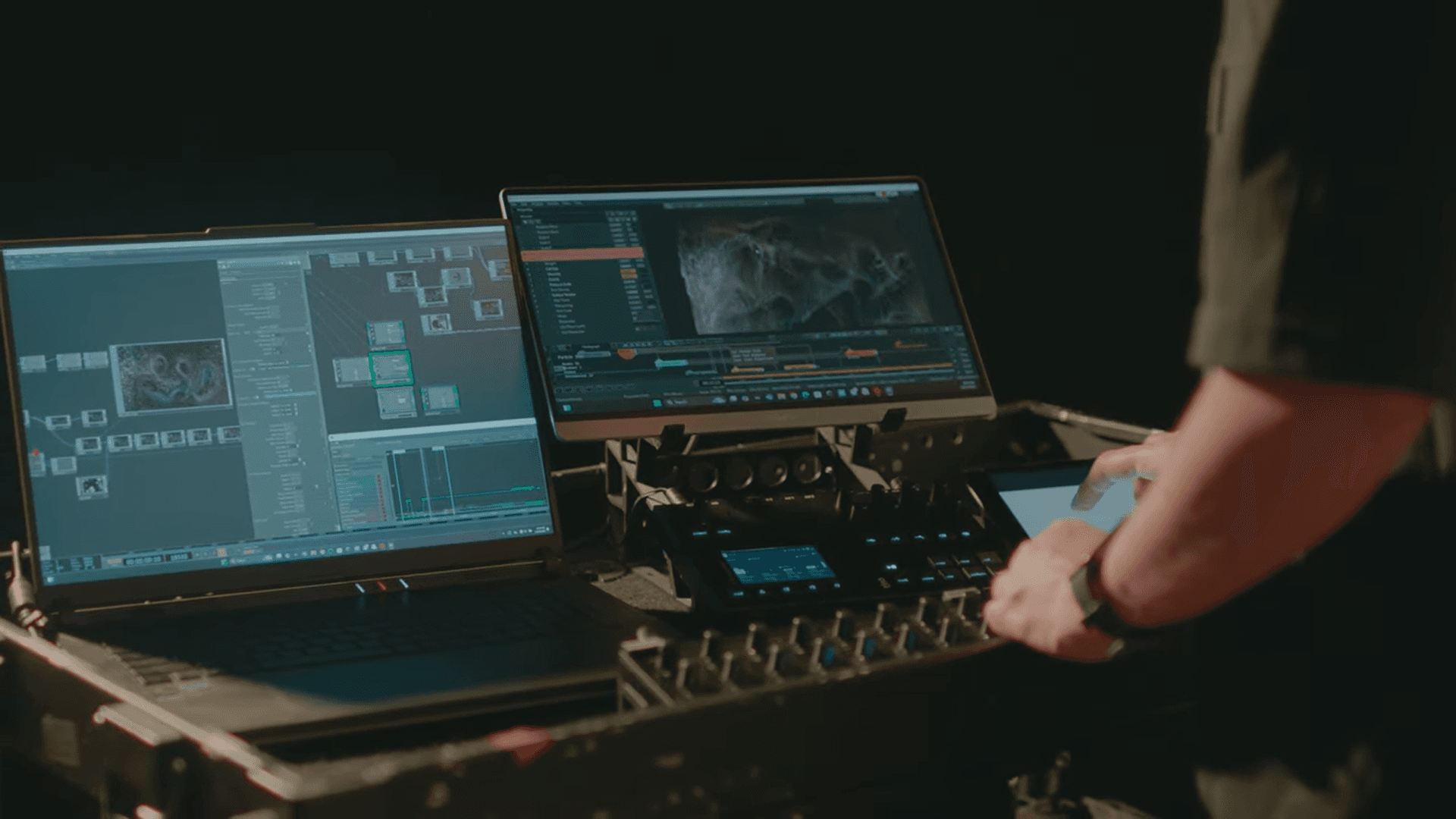
“I needed something that could paint with sound, capturing both the subtlety and grandeur of these forgotten narratives,” Merel explains. “The S4 gave me freedom to experiment and respond on the fly, exactly what this installation demanded.”
Using the S4’s real-time sampling, granular processing, looping, and spatial textures, Merel shaped an evolving soundscape that could sit in dialogue with the generative visuals. Rather than acting as a fixed score, the sound became performative: responsive, layered, and open to change.
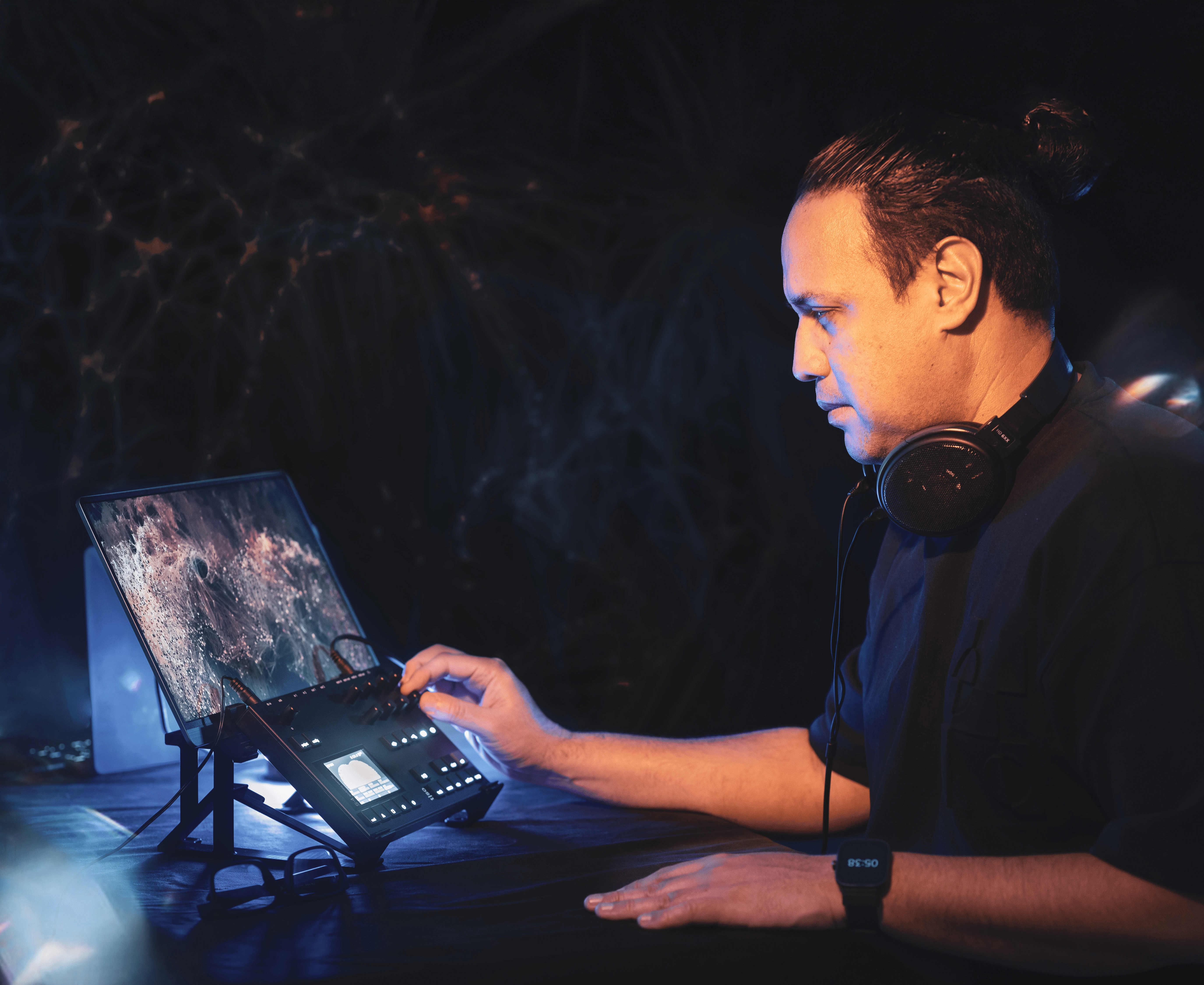
“The S4 allowed us to create evolving textures that encouraged people to linger, explore, and truly engage with the visuals,” Merel says. “I could perform live with the S4, adding subtle shifts on the fly and responding to how visitors moved around the space.”
In Interlink, the S4 became part of a larger system of movement, memory, and interpretation. Its role was not to explain the past, but to help create a space where these artists’ stories could be felt in the present.
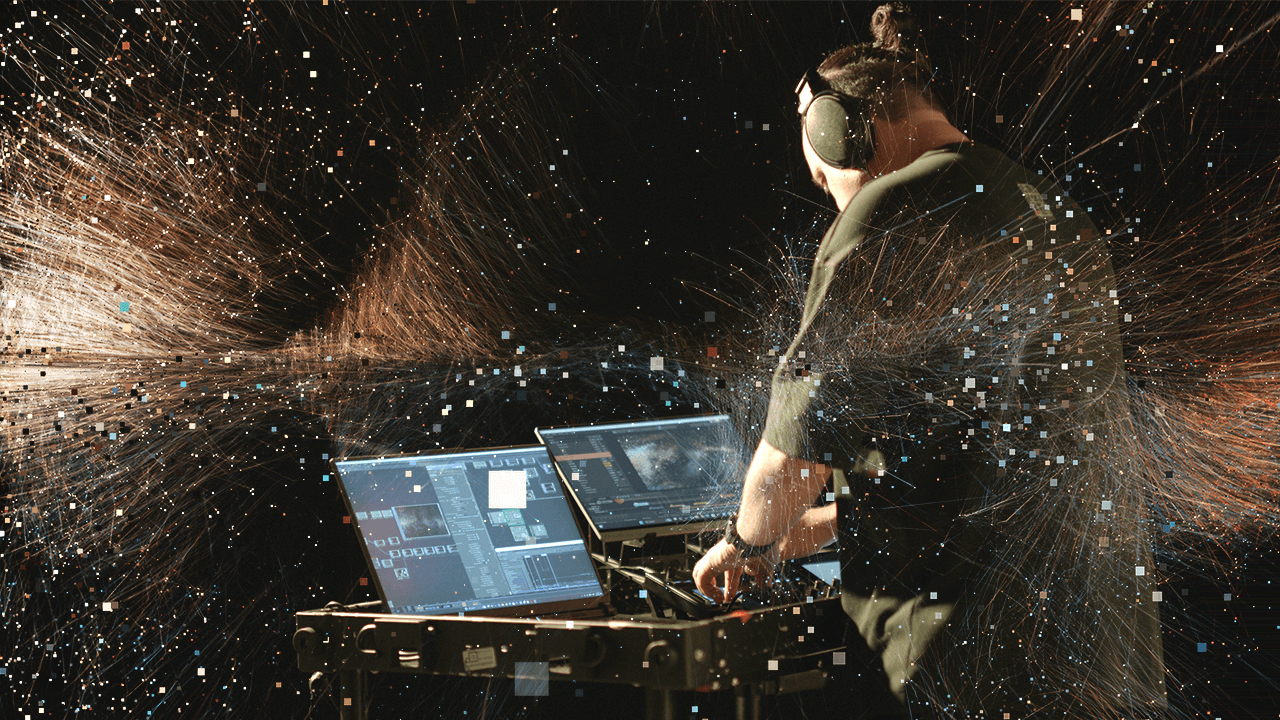
Learn more about Rosendo Merel
Instagram: instagram.com/rozmerel
YouTube: youtube.com/@rozmerel
Artworks: rozmerel.com

