
Matthew S on stillness, pulse, and immersive sound
We recently introduced Sounds, a growing collection of material made by artists we look up to and designed to be explored with the S4.
Today, we continue the series with Matteo Scapin, know as Matthew S and his release drifting fields: a body of evolving textures, environmental recordings, and slow-moving rhythmic material shaped through modular synthesis and long-form studio exploration.

Matthew S’s work sits between ambient composition, experimental electronics, and spatial listening practices. Across studio recordings, live performances, workshops, and collaborative projects, he returns to the same underlying questions: how sound occupies space, how repetition changes perception, and how small movements can hold attention over time.
For him, composition rarely begins with structure. It begins with immersion.
“drifting fields was created to capture the feeling of sound rooted in a place, like stepping into an imagined world that feels organic and real,” he explains. “I wanted to focus on stillness, depth, and the idea of sound as something you can inhabit.”
Building environments from movement
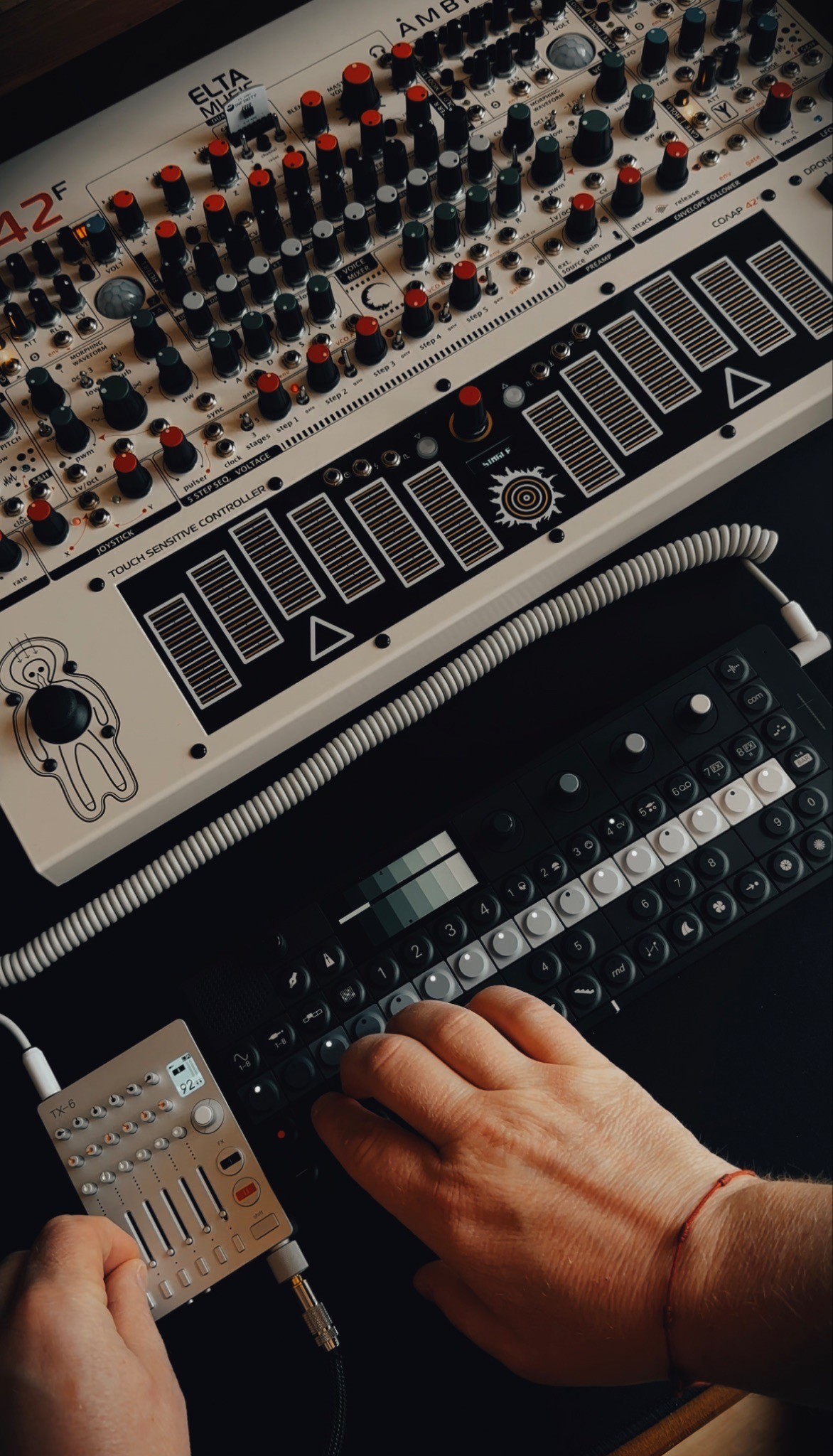
The material behind drifting fields emerged gradually through long recording sessions and extended experimentation. Rather than sketching fixed arrangements, he began by recording evolving modular patches, drones, and unstable textures without deciding immediately what they would become.
“The pack came together in a pretty organic way,” he says. “I started with a lot of sound exploration sessions on modular, recording long takes of evolving textures and drones, without thinking too much about structure at first.”
That process of accumulation became central to the work. Sounds were layered, resampled, processed, and returned to repeatedly until movement began to emerge from within them. Instead of treating recordings as finished objects, he approached them as material capable of changing shape over time.
Field recordings and analog sources became equally important in shaping that sense of depth. Environmental captures from around his town were folded into the work, creating traces of physical space inside otherwise synthetic textures. The distinction between recorded environment and electronic synthesis gradually became less important than the relationship between them.
“A big part of the process was resampling and reprocessing, taking simple sounds and pushing them until they had movement and character,” he explains.
His studio setup reflects that same approach to transformation. Modular systems built around Polyend and torso electronics hardware became tools for generating unstable and evolving structures, while instruments like SOLAR42, OP-XY, OP-1, and Steampipe introduced variation, resonance, and subtle rhythmic behavior.
The studio itself functions less like a production environment and more like a listening space: somewhere sounds are allowed to evolve slowly enough to reveal detail.
Pulse, instability, and small rhythmic shifts
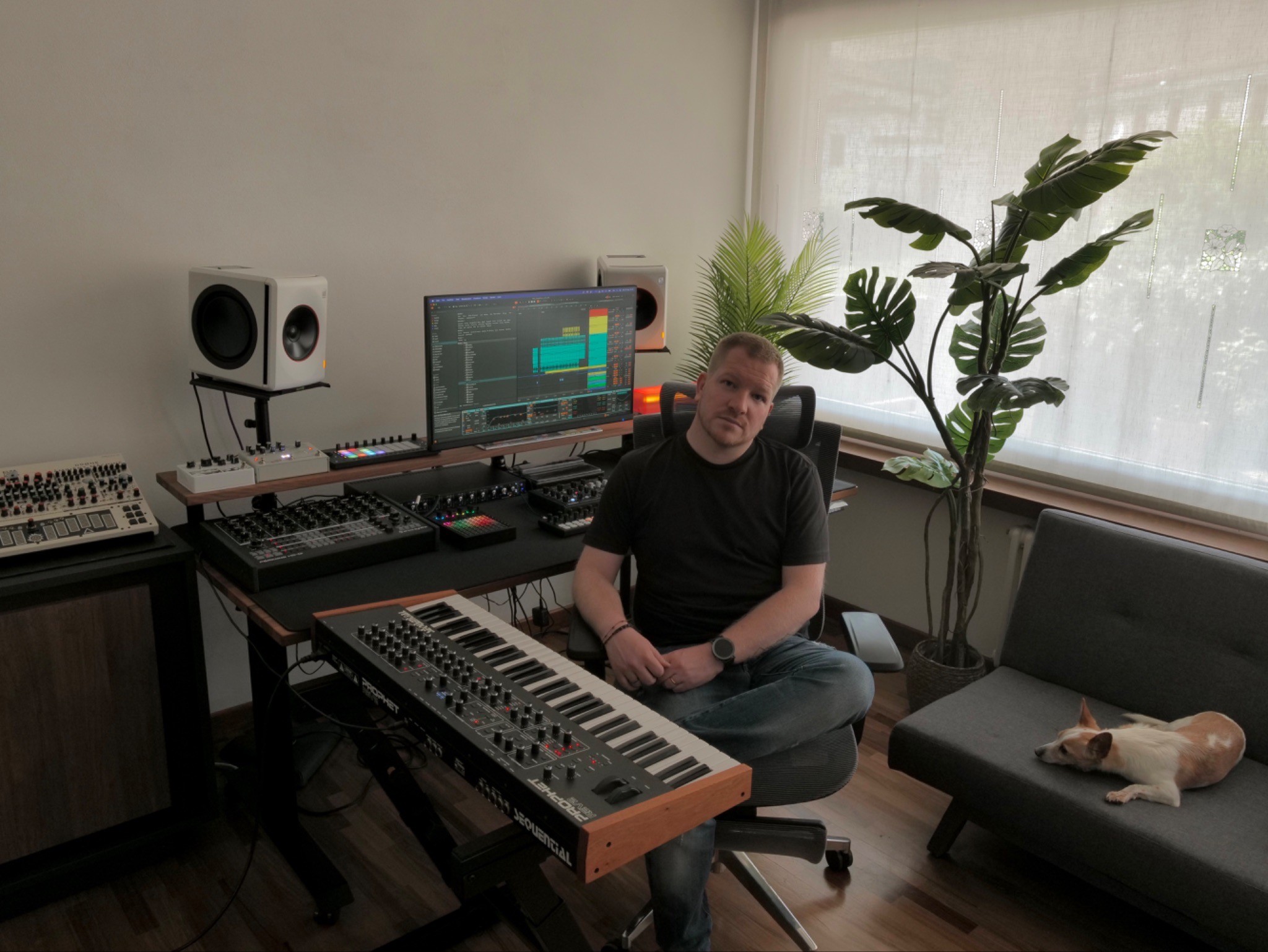
Although much of Matthew S’s work begins with drones and sustained atmospheres, rhythm gradually became one of the defining elements of drifting fields. Not through obvious percussion or fixed sequencing, but through tiny fluctuations and recurring pulses that almost disappear into the background.
That shift emerged unexpectedly during the recording process.
“I started with the idea of grounded, organic ambient textures,” he says, “but the heavy modular sessions with SOLAR42 and OP-XY started generating these super subtle, almost hypnotic rhythmic pulses that felt alive on their own.”
Those accidental rhythmic behaviors pushed the material away from static ambience and toward something more physical and unstable. Instead of building tracks around clear rhythmic frameworks, Matthew S became interested in sounds that breathe internally: textures carrying movement inside them rather than sitting still.
“It became less about pure atmosphere and more about sound that breathes and shifts in tiny, organic ways.”
That balance between stillness and motion appears throughout his broader practice as well. In live performance, he works with systems designed to layer gradually and evolve over long durations. The same ideas carry into workshops and community projects, where listening and intuitive interaction matter more than technical precision.
“Everything I do in the studio, live, or teaching revolves around creating immersive, evolving sound worlds,” he says.
What connects these different contexts is a consistent focus on time and attention. Sounds are rarely forced toward dramatic change. Instead, small transformations accumulate slowly until perception itself begins to shift.
Even heavily processed material retains traces of physical gesture: wind inside a field recording, unstable resonance from analog circuitry, subtle imperfections introduced through repeated resampling. These details keep the work grounded, even at its most abstract.
Letting sound remain open

One of the clearest ideas running through Matthew S’s work is that sounds should remain unfinished in some sense. Even after editing and selection, he leaves space for material to continue changing in someone else’s hands.
“In the editing phase, I focused on keeping everything alive and evolving but still usable in a track,” he explains. “So the final selection is made of sounds that have a strong identity, but also leave space for the producer to shape them further.”
That openness shapes the way he thinks about sharing material with other musicians. Rather than imagining a single intended use, he is more interested in how sounds mutate through context, layering, distortion, and reinterpretation.
“I hope people use them intuitively,” he says. “Maybe blending the granular textures with their own field recordings for film scores, or letting the pads and drones anchor meditative live performances.”
Several sounds within drifting fields feel especially close to the core of his practice. He points to a slowly evolving SOLAR42 pad shaped by granular movement, and to layered drones built from Steampipe recordings combined with environmental recordings captured around his town.
“Organic wind and steam hiss melt into synthetic space,” he says. “That’s the pulse-space-matter thing I’m always chasing.”
What matters most to him, though, is the pace at which people approach the material.
“Don’t rush it,” he says. “drifting fields is built for slow evolution. Give these sounds time and space to unfold.”
That idea runs through the entire practice surrounding the work: listening as patience, repetition as transformation, and sound as something less fixed than continuously becoming.
About Matthew S
Matthew S is a producer, sound artist, and educator working across ambient and experimental electronic music. His practice combines modular synthesis, field recording, live performance, and long-form sound exploration, with a focus on immersive textures, spatial listening, and gradual transformation.

